The Cost of Comfort
Predictability and ease are defining features of modernity. If you do what’s asked of you – and it really isn’t all that much – things should work out ok. Your survival isn’t up for grabs, after all.
And although this convenience of modern living is an important achievement, it comes with a cost: namely, the loss of spirited, fully felt, deeply inhabited aliveness. The values we are told to dedicate ourselves to – prosperity, health, security, success – are, on some level, shallow and unsatisfying.
Out of this sense of dis-ease, this feeling that something is off, us expats, us vagabonds and nomads, strike off into the vast expanse of the yet-to-be-known. Our hope is that we encounter life itself. And, as it turns out, we do.
The meeting with novelty pulls us up and out of the sleepy stupor modern existence imposes. It gifts us with experiences that lend depth and intensity and fullness to our lives.
For a while, at least.
But before examining the shortcomings of the expat solution, we need to understand how direct contact with the unknown and the unfamiliar helps in the first place.
It’s About Time

The expat who makes the deliberate choice to move abroad is well aware that too much familiarity – too much routine – dulls the senses. According to Thomas Mann, familiarity also shortens our experience of time.
“If one day is like every other, they are all the same, and the effect of perfect uniformity is that even the longest life would appear very short and be gone in the twinkling of an eye.“
Routine, while making life predictable, also makes it stale and monotonous. This has the effect that time seems to pass us by quicker. While it is certainly true that boring days are excruciatingly slow, the years themselves get scrunched down and compressed. An hour feels long, but the days disappear before our half-opened eyes. The years lack distinguishing characteristics that gives them density and weightiness. Again quoting Mann, “uninterrupted homogeneity shrinks great vistas of time in heart-chilling fashion.”
The expat senses all of this. When she moves abroad, her routine is thrown asunder. The familiar is largely, if not entirely, replaced by the unfamiliar. As she is confronted with challenge and novelty, the months and years become substantive and transformative. Her experience of life is intensified and there is now a density – a robustness – to her experience of time, which feels longer when compared to the years spent in monotonous routine. This is the product of a life fully engaged with rather than one merely endured.
But, as alluded to above, there is a problem here – one that we would be remiss not to mention.
The Honeymoon Always Ends
The novelty will, eventually, wear off. The move abroad is a loud and meaningful protest against humdrum, monotonous, quickly passing existence. But it, too, is subject to the dull but imposing fangs of routine and predictability.
The unfamiliar gradually makes way for too much of the familiar. Aliveness eventually resigns itself to a dreary, draining deadening. And so, sooner or later, the expat finds herself face-to-face with the circumstances that she so admirably rejected in the first place.
This means that the move abroad, while courageous and intelligent and temporarily life-changing and time-altering, is not the ultimate solution. What is truly needed is a sustainable path to fully felt, deeply embodied existence.
A Life Fully Felt
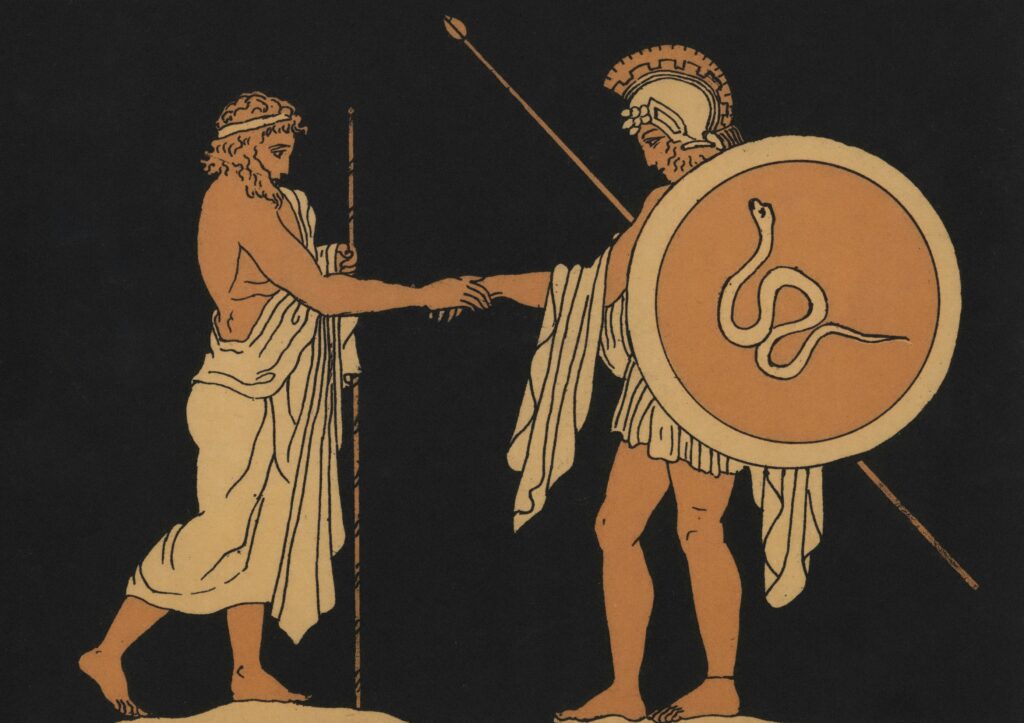
In the wonderful book Self and Soul, Mark Edmunson contrasts modern life with the likes of the lives of Achilles and Hector. “They live with a fullness and intensity of purpose… they are united within themselves… Though the lives of Homeric heroes are short, they are replete with meaning.”
Purpose, wholeness, and meaning.
Those elements distinguish a quickly passing, half-embodied existence from a fully realized, deeply felt life.
How, then, can we bring those conditions to the front of our daily existence? And how can we do it in a lasting manner?
- Novelty, as we’ve seen, is one way to inject our lives with purpose and meaning. But moving abroad is only one form of novelty. Novelty can also be pursued through acquiring new skills, meeting new people, and continually discovering within ourselves new dimensions of thought and feeling.
- This is where therapy has much to offer. Good therapy opens people up to parts of themselves long ago forgotten. Individual therapy, earnestly pursued, shows people where they avoid themselves, how they recreate their suffering, and the ways in which they hold themselves back from life. Couples therapy helps people see how they pull back from the aliveness of intimacy rather than step forthrightly into it. Through therapy, we uncover more of ourselves, thus allowing us to engage with more of life.
- This is where therapy has much to offer. Good therapy opens people up to parts of themselves long ago forgotten. Individual therapy, earnestly pursued, shows people where they avoid themselves, how they recreate their suffering, and the ways in which they hold themselves back from life. Couples therapy helps people see how they pull back from the aliveness of intimacy rather than step forthrightly into it. Through therapy, we uncover more of ourselves, thus allowing us to engage with more of life.
- High stakes circumstances demand wholeness of being. They force a narrowing of our attention and the full concentration of cognition, emotion, psychology and physicality. To prevail, each of those elements must be united.
- An issue with modern living is that there are, admittedly, few high stakes circumstances to pursue. There is very little life and death struggle, unless you put yourself in extreme circumstances. Perhaps, though, we can be a bit more modest and appropriately realistic. For instance, a particular fear of yours (such as rejection) likely dictates much of your life. You avoid circumstances and people that could trigger it. Therefore, deliberately pursuing opportunities that trigger that fear will feel very high stakes to you, thus uniting the various aspects of your being in a singular pursuit.
- An issue with modern living is that there are, admittedly, few high stakes circumstances to pursue. There is very little life and death struggle, unless you put yourself in extreme circumstances. Perhaps, though, we can be a bit more modest and appropriately realistic. For instance, a particular fear of yours (such as rejection) likely dictates much of your life. You avoid circumstances and people that could trigger it. Therefore, deliberately pursuing opportunities that trigger that fear will feel very high stakes to you, thus uniting the various aspects of your being in a singular pursuit.
- And then there is what we aim our lives towards (the subject of Mark’s book). When we pursue a value – an ideal – our lives become something bigger than themselves. They become the vehicle by which we pursue the ideal. That ideal – compassion, contemplation, courage – lends our lives significance, dimensionality, and density. Those ideals are unattainable in any ultimate sense, which is precisely what keeps us oriented towards them.
- Classic ideals such as those just listed stand in stark contrast to popular modern values such as health, well-being, longevity, security, and success. Those modern values are circular. Their objective is that our lives continue, so that… they can go on continuing. We live longer… in order to live longer. Again bringing in Edmunson, “The middle-class man, it’s been said, is the man who desires to live as long as possible. But is what he experiences in that quest really life – at least when you compare it to what Hector and Achilles enjoyed?” An obsession with health and longevity is meaningless if that health and longevity is not directed to something beyond itself. When it points back at itself, it falls into itself. Clinging to life is not the same as living life – it is a defensive position rooted in anxiety. In trying not to lose what it has, it doesn’t use what it has.
- A fully felt life, however, is marked by intensity, courage, presence, and purpose. A life that makes its mark in time is a life that is dense and multi-dimensional. It is a life that points outside of itself, to something beyond itself; a life that makes use of itself in pursuit of something more than itself.
What To Do About It
You, the expat, will temporarily achieve meaningful aliveness by disregarding the comfort of familiarity.
But, ultimately, you too must find within yourself something worth more than yourself, something beyond yourself, something that unites all of yourself. And though it isn’t my place to tell you what any of those things are or should be, I have some ideas.
For instance, you may find yourself drawn to the ideals mentioned above (compassion, courage, or contemplation). Devoting yourself to the pursuit and realization of those ideals could be that which makes life open up for you.
Or, you may be interested in exploring the inner dimensions of who you are, so that you step into life with the full force of your confidence and authenticity. Alternatively, you might want to open your heart completely so as to open fully in intimacy, free of careful self-protection.
Alternatively, the active pursuit of high-stakes circumstances and challenges (high stakes to you, who cares what anybody else thinks) may motivate you to reach beyond your current capacities and self-identity.
Each of these represents a path to intense engagement with the present moment. By aiming ourselves towards something beyond ourselves, we make use of ourselves, rendering our lives with purpose and significance. Each moment then becomes dense, bursting at the seams with meaning, and the painful predictability of modern monotony ceases to dull our senses and steal our time.
Share with your community!