Thank you for reaching out to The-Other-Therapy! One of our
representatives will get back to you shortly. We appreciate your
interest and look forward to assisting you.
“And if you think tough men are dangerous, wait until you see what weak men are capable of.“
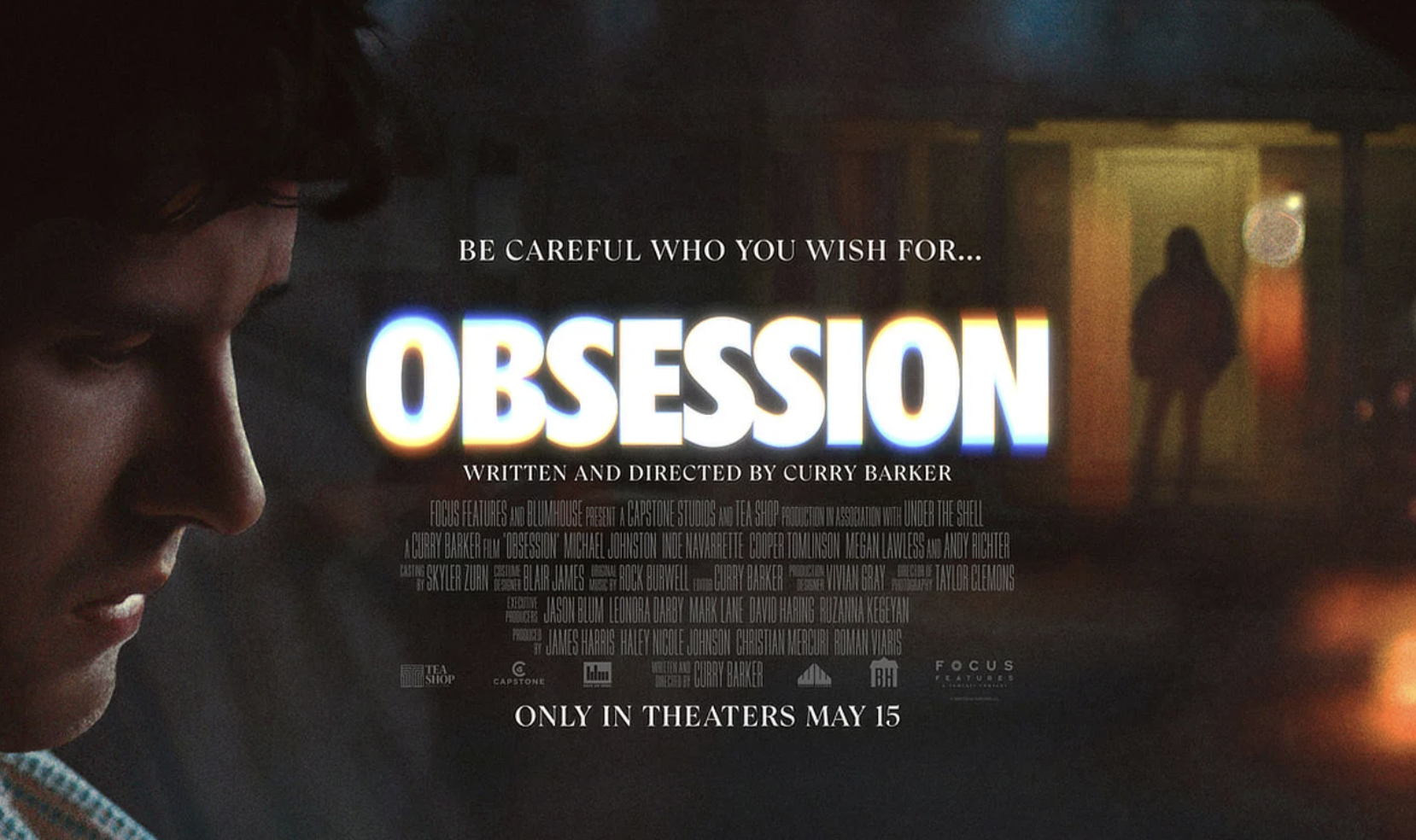
Obsession is a movie about the dark side of the nice guy persona.
The “nice guy” doesn’t just think of himself as kind, considerate, caring, devoted, patient, and selfless. Heneedsto think of himself in those ways.
No other identity will do.
He simply can’t imagine himself capable of hurting anybody. He cannot allow himself to see that he mistreats others. Or that he takes advantage of them. Any behavior of his that falls outside the boundaries of “nice guy” is denied. If it challenges his cherished self-concept, it is rejected.
The horror film Obsession goes to terrible lengths to exemplify this.
The main character, Bear, is the prototypical nice guy, and his obsession with seeing himself as all-good impairs his ability to acknowledge his badness. His refusal to accept his cowardice and his aggression is the fuel that his entitlement and abuse run on, and it drives the plot forward to horrifying ends.
Virtue? Or Cowardice?
The obedient always think of themselves as virtuous rather than cowardly.
– Robert Anton Wilson
The movie begins by appealing to the viewer’s empathy. We watch Bear practice confessing his love for his long-time crush, Nikki. He is sappy and vulnerable, but we also see that he is, genuinely, a nice guy.
In the next scene, Bear finds his cat, Sandy, dead. Bear is grief-stricken. At this point, the viewer is developing a touch of compassion for Bear, perhaps even beginning to root for him. Nice guys are, after all, easy enough to like.
Initially, anyway. But in this case, that doesn’t last for long.
In the hours after his cat’s death, Bear goes to the bar rather than stay at home (which is what he wants), he gives in and lets Nikki pay for drinks (when he offers), and, most critically, he denies that he likes Nikki when she asks him point blank if he does.
In each instance, he sees himself as nice and accommodating. He is obedient to the internal rule that he must not ruffle feathers or dare to rock the boat. He makes space for others, gives into them, and denies himself. He strives to keep things pleasant and predictable, and erases himself in order to do so. He rejects aggression of any form, including self-assertion.
The problem is that Bear’s outward display of niceness masks his inner lack of courage. In fact, he resorts to being nice precisely because he doesn’t have the guts to be anything else.
When Nikki, the girl of his dreams, asks him if he likes her, he caves. Rather than state the truth (“yes!”) he denies it (“I like you as a friend”). He doubles-down on the safe bet.
The nice guy believes that, given enough time, the woman of his dreams will see how steadfast and kind he has been and that, in seeing these things, she will choose him. Therefore, he doesn’t have to risk declaring his love for her.
But the reality – in this movie and in so many other cases – is that she doesn’t choose him.
And so the nice guy gets angry as the world denies him in spite of his foolhardy patience. This creates a conundrum: he can’t acknowledge his anger (that would undermine his nice guy identity), but he also can’t deny his desires.
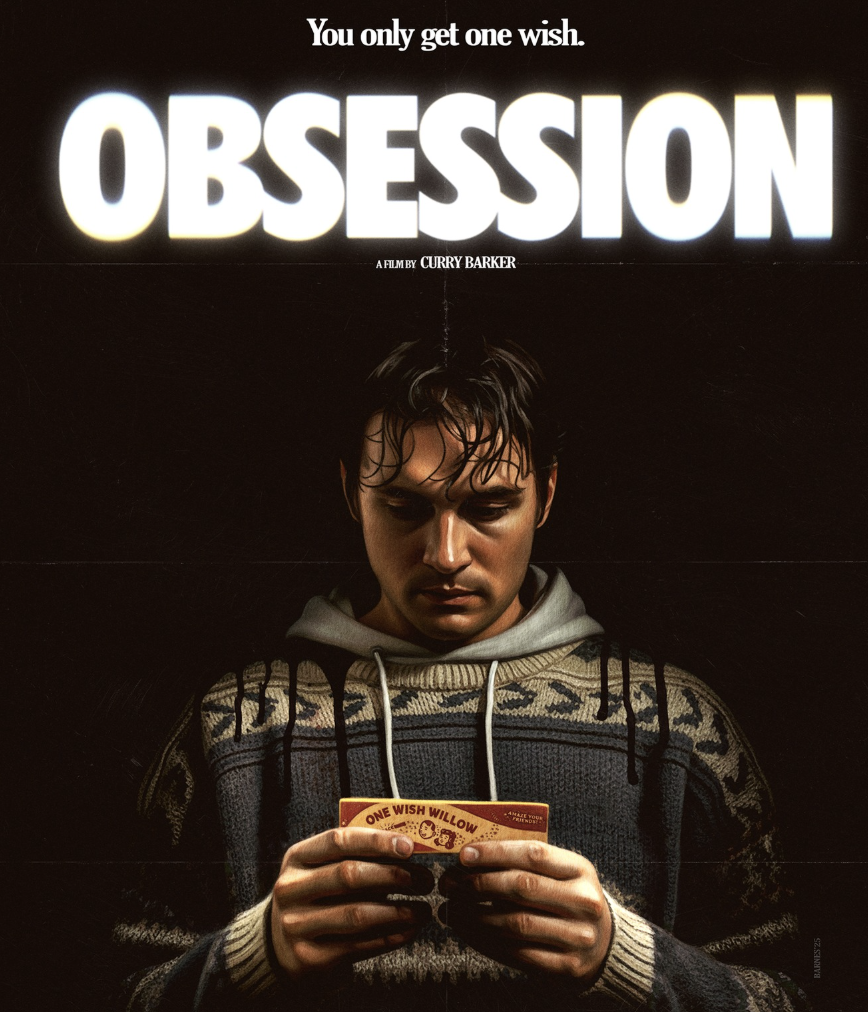
Fortunately for Bear, he is offered a way out. In the immediate aftermath of his moment of cowardice, he spots the One Wish Willow bar behind him. The bar promises to grant him a wish, any wish. All he has to do is make his wish and break the bar. (A much less courageous path to getting what you want, we might note.)
With child-like desperation he says, “I wish that Nikki loved me more than anybody else in the entire world,” and snaps the bar in half.
Now, Bear surely didn’t think his wish would never come true. But the factthat he makes this wish in the first place shows the darker character lurking behind his accommodating display, for his wish would categorically deny Nikki her agency. It shows that he would, apparently, take away her right to self-determination if it meant that she would have him. Instead of giving her choice (by being honest about his love for her when she gave him the chance) he would eliminate her agency entirely.
And now, ladies and gentlemen, we have our movie.
Denial All the Way Down
The wish worked and Nikki wants him.
Bear is well aware that she didn’t want him before the wish. But he wants so badly to believe that her newfound love for him is sincere! But he knows it isn’t. But he likes it! So he has to deny the obvious truth. He has to convince himself that she is choosing him of her own accord when he knows that she isn’t.
A couple of scenes later, they’re kissing when, mid-makeout, she freaks out. Her true self comes flashing back onto the scene for a terrible instant. She screams loudly, recoiling from him in horror.
And there it is.
The true color of things is revealed. The wish DID work, and it worked by hijacking her agency and forcing her to like him. Surely, we think to ourselves, Bear can’t deny this breakthrough of her actual self, this shocking display of reality. Surely he’ll spring into action? Surely he’ll do all that he can to save her?
As it turns out, no.
Instead, he tries to have it both ways. That is, he tries to keep hold of his cherished “good guy” image while decidedly NOT acting to undo his wish and return her agency to her.
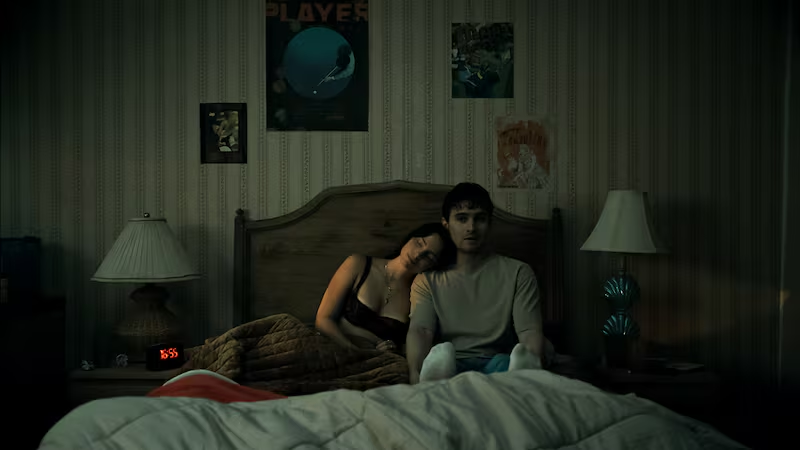
In one case, he achieves this by sleeping on the floor, while she sleeps in his bed. In another, he achieves it by telling his friend, Ian, about her erratic behavior, while omitting the real reason for it. In both cases, he alleviates his guilt while ignoring her well-being.
To be fully honest with himself or his friend would a) force him to admit that she doesn’t actually like him and b) recruit people to help return her agency to her and c) reveal to himself and everybody else that he is exploiting her.
So, instead of the truth he opts for half-truths and forced denial.
As the movie progresses, Ian makes numerous attempts to wake Bear up. Bear categorically pushes aside each of them.
The real kicker, though, is when Bear, recognizing how fucked up things are, calls the number on the back of the One Wish Willow box. While speaking with the operator, the real Nikki screams out in agony in the background. Bear responds by frantically ending the call.
Later, he sleeps with Nikki, fully aware that it isn’t the real her. Effectively, he rapes her. That same night, the real Nikki wakes up while “she” (the one who stole Nikki’s body) is “sleeping.” The real Nikki pleads with Bear to kill her, to save her from her misery.
Bear’s heroic response?
It isn’t to take her cry for help seriously. It isn’t to do everything he can to save her. It isn’t to kill her. Nor is it to kill himself for her sake (as the operator told him to do).
It’s to make it about him.
He responds: “What’s so bad about being with me?”
What’s so bad about it?
It’s that you, Bear, would have this woman lose her right to self-determination, be tortured in a room somewhere, and have her entire life blow up all so that you can have “her” to yourself. And the whole time you steal her life away, you tell yourself you’re the good guy.
“I’m Not a Creep”
Somewhere in there, Bear pleads with Nikki to not make it seem like he is a creep.
Why would he have to ask her to do this?
Well, because he is one. He knows it, but he doesn’t dare admit it.
Instead of doing that, he makes her the problem. She is acting crazy. She is making him seem like a creep. She is scaring him. She is cooking cats. She is making his life hell. And it’s true! She is acting crazy! But it’s all because of him! That’s the convenient kernel (towering oak tree, by this point?) that he leaves out.
How convenient.
In this way, we see how disorienting our cherished identities can be. Bear’s allegiance to his “good guy” image causes him to deny reality until it looks to him like she is the problem and he is the victim. Because he refuses to see the bad things that he is responsible for, he has to make somebody else the location of what’s gone wrong.
By the end of the movie, things have spiraled entirely out of control. Nikki has brutally murdered a different girl at work, Sarah, and shot his best friend Ian. And she is really freaking Bear out, poor guy.
Realizing, at long last, that he has to actually do something about this, he puts a gun in his mouth. By killing himself, he’ll free Nikki and stop the escalation of doom. But he can’t bring himself to do it. Instead, he turns to same pills that killed his cat.
This last gasp act of suicide isn’t anything close to redemption. His efforts to “make things go back to normal” aren’t motivated by genuine concern for Nikki. He opts for suicide because he can’t handle it anymore. It matters little to him that she never could. He has had enough of it. He is coming undone.
Bear doesn’t kill himself to save her. He kills himself to save his image of himself. He’d rather die than confront the death and destruction his selfish cowardice led to.
Monsters and Healing
I don’t think that you have any insight whatsoever into your capacity for good until you have some well-developed insight into your capacity for evil.
– Jordan Peterson
The cure for people like Bear – people pleasers, nice guys – is to lean into their repressed half. They have to see that they, too, are monsters. Or, at the very least, capable of monstrous acts. When one is aware of their capacity for evil, they will be able to notice when they behave in evil ways. They won’t have to blind themselves to it. At that point, they can choose otherwise.
This type of mature goodness is not in opposition to evil. It is in opposition to false niceties. Strong goodness respects evil and its capacity for it. True goodness – genuine kindness – has an edge to it. It knows that it can do bad but it makes a conscious choice to pursue the good. It is goodness with teeth, goodness with strength. It is an embodied, well-rounded goodness that is in relationship with reality and that pulls no punches to save itself. It is goodness with courage.
Superficial nicety, on the other hand, rejects evil, pretending to be above it. This delusion, this denial, lack of imagination, and supposed moral superiority refuses to see its own evil. Bear (an ironic nickname) was incapable of owning the monster within. He rejected his tough side – his “bad” side, his selfish, cruel, aggressive, angry side – thus giving his monster free rein to wreak havoc.
That said, we must recognize that the nice guy construct is exactly that – a construct. It is a learned way of being, forged in the childhood environment of an immense pressure to be good, to repress anger, to deny aggression, and to forego self-assertion. The nice guy is the product of an environment that refused to let the child be any other way.
Even though nice guys may do alright in the world, they have to sacrifice much of themselves and their desires in the process. In benign cases, this self-sacrifice leaves them mildly unsatisfied and frequently overlooked. In severe cases, their repression and resentments act out from the shadows, causing harm to themselves and others.
In order to feel at home in the world and to be of genuine service to others, they must move beyond the impossible command that they be all-good, and reclaim access to the monster within. They must touch into forbidden feelings. Wielded well, this aggression serves as the basis for self-assertion and genuine strength. It gives birth to a real individual, a whole person.
As Steinbeck put it, “Now that you’re not trying to be perfect, you can be good.” Truly good.
By setting aside the pursuit of perfection, more of the self can show up and more of the world can come into view. Self-absorption and denial can be replaced by the genuine concern for others that is the basis of a mature, well-rounded, robust good. The sort of good that would never make Bear’s wish in the first place.
Unfortunately, our Bear never got there. And when he could no longer deny the destruction he had caused, he put himself to sleep (suicide by sleeping pills) rather than wake up and look his monster in the face.
He died corrupted by his pursuit of perfection, by his enduring allegiance to his image of niceness. Never having owned his darkness, he never got in touch with his genuine light. Everybody close to him paid the price.