

You’re at a rooftop bar in Dubai Marina on a Thursday night. The skyline is extraordinary. The drinks are expensive and plentiful. The people around you are high-earning, well-dressed, and very good at sounding like everything is fine.
Later, back in your apartment, the air conditioning hums at full blast because it’s still 38 degrees outside at midnight. You’re comfortable. You’re living the high life. And yet… Something doesn’t add up.
You can’t quite put your finger on what’s missing, but you sense it’s there.
I work with English-speaking expats across the UAE, Qatar, Saudi Arabia, Bahrain, Greece, and Cyprus. The settings differ, but what I hear underneath the surface is consistent enough that I can say something honest about what this region does to people.
Here’s what I’ll cover in this post: the impact that expat life in the Gulf has on people, what to look for in a expat therapist, and how I work.
What Expat Life in the Gulf Does to People
The Gulf expat package is uniquely seductive. Tax-free salary, luxury apartments, a social scene that never stops, and a city built to absorb your ambition. It delivers on several of those promises. That’s part of what makes the harder parts difficult to recognize.
The money creates its own pressure. Gulf expat packages are generous by design. Companies know they’re asking people to relocate to a demanding environment, and they compensate accordingly. But the salary risks becoming a trap. When you’re earning more than you ever have, it’s hard to admit that you’re not okay. It would be ungrateful. You signed up for this, after-all. You tell yourself that people would kill to be in your position, and you’re probably right. So you deny what isn’t working.
The heat shapes everything in ways you didn’t anticipate. Six months of the year, outdoor life is genuinely hostile. Social life moves indoors and takes on a particular quality: controlled, air-conditioned, slightly unreal. The lack of spontaneous outdoor life removes a layer of psychological relief most people depend on. You can’t just go for a walk. You can’t sit outside. The environment presses you inward, and then the social scene presses you to perform.
The social scene is lively and, sometimes, hollow. There’s no shortage of people in the Gulf expat world. Happy hours, brunches and rooftop gatherings ensure the social calendar fills quickly. But the connections that form in that context tend to stay in that context. The rotation of people is constant. Contracts end, families relocate and better packages emerge elsewhere. You can spend three years in Dubai and feel like nobody actually knows you. Not because the people aren’t good, but because the conditions aren’t built for depth.
The work is hard in ways that don’t get acknowledged. Gulf expats, especially those on corporate packages, often work long hours in high-pressure environments with significant cultural complexity. Navigating hierarchies and managing up across cultural lines is exhausting. And because the compensation is high, complaining feels off-limits.
Identity quietly erodes. At home, your professional reputation preceded you. Your humor landed. You knew how things worked. Here, you’re starting from a position of not-knowing in a culture that can be difficult to read. The competence you’d built over a career doesn’t transfer automatically. What replaces it is a version of yourself that is less certain, more performative, and working harder than it lets on.
One client came to me dealing with social and performance-related anxiety in the competitive demands of the Dubai world. He felt that it was hard to connect with people in genuine ways. Over the course of working together, he became more grounded, more confident, less dependent on the appraisal of others, and more able to make strong connections proactively with people he resonated with.
What to Look for in a Therapist as an Expat in the Gulf
Finding good English-speaking therapy in the Gulf is possible but requires care. The private healthcare market is sophisticated, and there are qualified clinicians available. But the environment creates a specific set of considerations worth knowing about.
Find someone who understands expat life specifically. Not every English-speaking therapist understands the particular psychology of international relocation. Look for someone with direct experience of international living or a specific practice focus on expat populations.
Make sure they’ll be honest with you. The Gulf expat environment rewards performance and penalizes vulnerability. A therapist who mirrors that by only validating what you bring will feel comfortable and go nowhere. The work worth paying for is the kind that names what it sees, including the ways you might be contributing to your own difficulty. That’s where things actually start to move.
It’s also worth understanding how how therapy can go wrong before you start. That will help you ensure the therapy is working for you.
Look for someone who works deeper than coping strategies. Stress management tools and breathing exercises have their place. But they don’t reach the patterns that followed you to the Gulf and that show up in how you relate to your partner, your colleagues, and yourself. Look for a therapist trained in approaches that work underneath the surface: psychodynamic, attachment-based, or relational work that examines what’s actually driving the problem.
Understand what confidentiality looks like in your context. In some Gulf countries, mental health stigma remains significant, and people are rightly cautious about who knows they’re in therapy. Online therapy with a therapist outside the region removes that concern entirely. Your employer, your colleagues, and your social circle have no visibility into sessions conducted over secure video with someone based elsewhere.
How I Work
I provide online therapy for expats across the Gulf and Eastern Mediterranean via secure video. Whether you’re in Dubai, Abu Dhabi, Doha, Riyadh, Manama, Athens, or Nicosia, we can work together.
I’m based in Istanbul — one hour behind the Gulf — which makes scheduling straightforward. Most clients find morning or lunchtime sessions work well on their end.
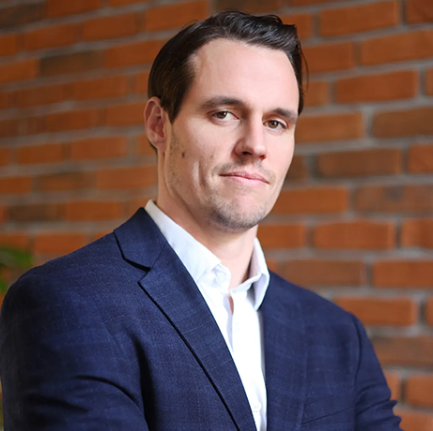
My approach is psychodynamic and relational. I’m less interested in giving you coping strategies and more interested in understanding what’s driving the problem: the patterns you’ve built and the feelings you’ve learned to avoid.
I work with individuals dealing with anxiety, depression, identity shifts, avoidance, and self-doubt, as well as couples navigating the tensions of building a life across cultures.
I’m direct. I’ll tell you what I see, including the ways you might be getting in your own way. My clients will tell you that’s where the real shifts happen.
Individual sessions are $200. Couples sessions are $250.
Other English-Speaking Therapy Resources in the Gulf
If I’m not the right fit, here are other ways to find support:
Online directories. TherapyRoute and It’s Complicated both allow you to filter by language. Psychology Today’s international directory lists therapists across the region.
Local private clinics. Most major private hospitals in Dubai, Abu Dhabi, and Doha have English-speaking mental health professionals on staff. Wait times vary and the approach tends toward brief, structured interventions rather than longer-term relational work.
Employee Assistance Programs. If you’re on a corporate package, your EAP may cover a number of sessions with an English-speaking therapist. Worth checking before paying out of pocket.
If You’ve Been Telling Yourself It’ll Pass
I genuinely hope it will, but oftentimes psychological, emotional and relational problems don’t resolve themselves on their own.
But they do make sense once you look at them clearly and learn how to overcome them. This usually with requires someone who understands the context and knows how to work with what’s underneath.
If you’re tired of managing it alone, you can schedule a free intake call, get in touch, or learn more about how individual therapy works.
Share with your community!