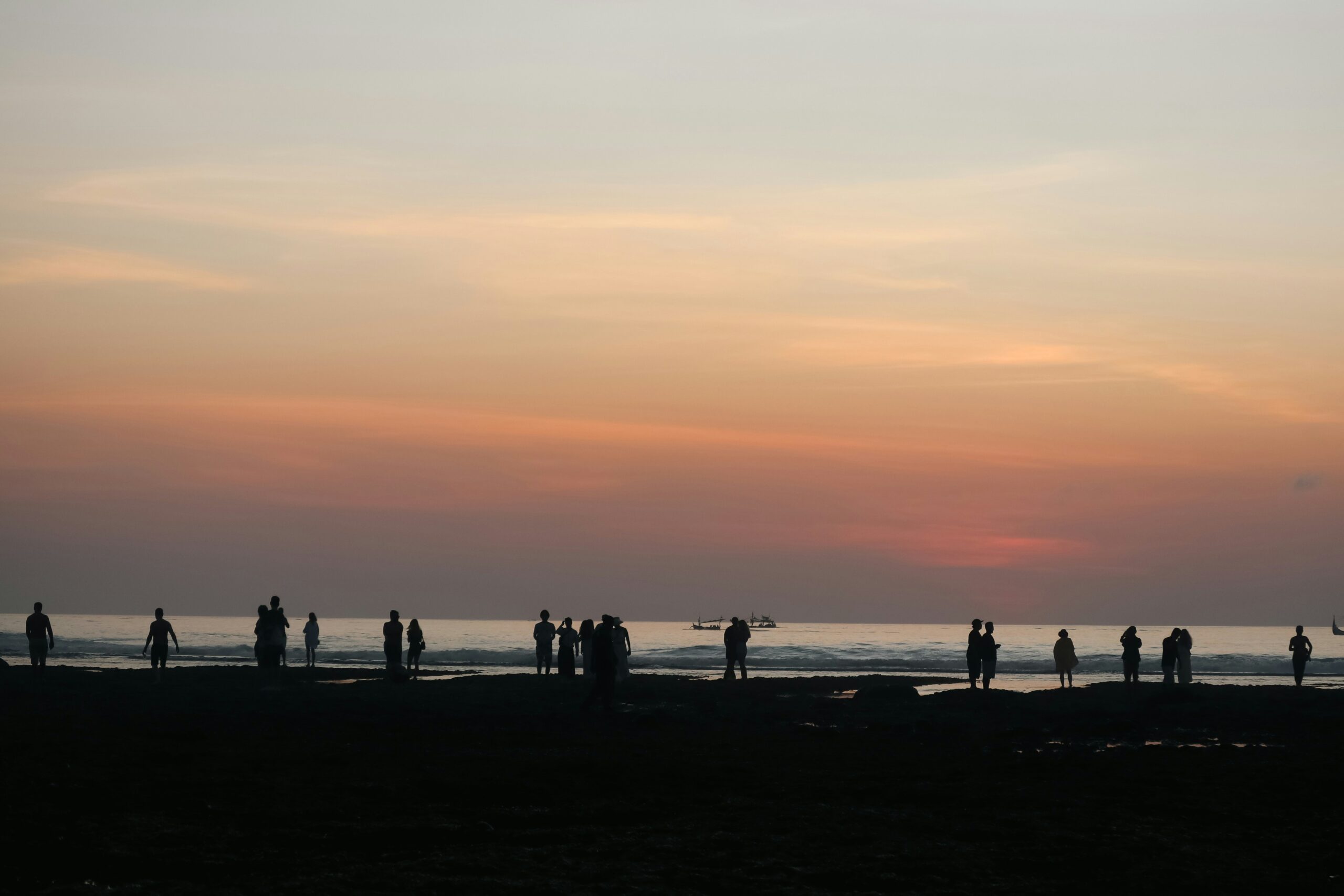
You’re sitting across from each other at a restaurant in Seminyak, and neither of you is saying what you think. The food hits the spot. The sunset is doing its thing. But, somewhere amongst all of that, a distance has formed between you and your partner. And you can’t quite put your finger on why that is.
This evening, however, you’re determined to figure it out. You name it – the growing distance – aloud. But your effort doesn’t land. Your partner reacts poorly, and then goes quiet in a way that used to last an hour but now lasts the rest of the night.
You’ll both recover by morning. You typically do. But the distance feels harder to overcome, and the recovery, if you can call it that, feels less solid and trustworthy.

Though I live in Istanbul, I offer couples therapy in Bali to many expat and digital nomad couples. They contact me after months – sometimes years – of accumulating relationship strain that they can’t resolve. They can’t figure out why paradise isn’t helping and, in some cases, is making it worse.
Relational Struggles for Couples in Bali
The avoidance Bali makes comfortable
Bali’s wellness culture can work as sophisticated avoidance for couples in trouble. You go to a breathwork session together, do a couples retreat in Ubud, sit in a sound bath side by side, and feel connected for an afternoon, all without having the conversation you need to have.
The environment rewards experience over reflection. Another ceremony, another sunset, another dinner with interesting people. The stimulation keeps you both distracted enough to avoid what’s sitting between you.
Couples who substitute Bali’s experiential richness for relational work tend to cycle: a beautiful weekend, the same fight on Tuesday, another beautiful weekend. The environment supports the loop.
A life with no walls
Most relationships have external structure that naturally creates a healthy degree of predictability and separateness: separate jobs, separate commutes and separate friends. This allows a relationship to naturally balance connection with autonomy. Bali strips that away. You work from the same co-working office. You eat most meals together. Your social life is shared. Your schedule overlaps constantly. You engage in the same hobbies.
I hear versions of this all the time: We get along fine when we’re busy. It’s when we’re constantly surrounded by each other that everything falls apart.
Bali removes the buffers and constraints that were doing the work your relationship isn’t currently accounting for.
When one of you loves it here and the other doesn’t
This is another common dynamic I see in Bali couples. One partner has found their thing, be that a community, a project, or a version of themselves that feels more alive. The other, meanwhile, is trying to hold it together. Maybe they’re lonely. Maybe they left a career that gave them identity and now spend their days without purpose. Maybe they miss home in a way that feels embarrassing to say out loud.
The struggling partner can’t name it without feeling like they’re ruining the other person’s happiness. So they perform. They say it’s fine. They go to the beach club and smile. Resentment builds until it surfaces in a fight about dishes, screen time, or how much money was spent on something that “doesn’t matter”.
The thriving partner doesn’t understand what’s wrong. They’re both living the life they agreed to and dreamed of, after all.
The social world that keeps turning over
Bali’s expat community cycles fast. You meet people, invest in them, and they leave. The couple who became your closest friends moves to Portugal. The coworking crew dissolves. Your neighbours change every three months.
Over time, you load the relationship with everything your social world used to hold. Your partner becomes your best friend, your confidant, your support system, your mirror. That is too much weight for one relationship, and most couples don’t notice it until things start to crack.
I ask couples who their close friends in Bali are, and there’s often a pause. They have people they socialize with and admire and enjoy. But they don’t always have people they reliably call upon when things go bad. Apart from their partner, of course (when things are going well).
The extra weight intercultural couples carry
If you’re with someone from a different culture – and many expat couples in Bali are – there’s a layer that rarely gets addressed. One of you is likely doing far more cultural adjusting than the other. One or both of you left family, language, professional context, and an entire way of understanding daily life. When one person’s adjustment is bigger and harder, that is a strain on the relationship.
The partner who has to adjust more (or who has a harder time adjusting) begins to feel unsupported and, perhaps, like a burden.
As an American in Istanbul, married to a Turkish woman, I know how hard the cultural adjustment can be. As a therapist, I know how to help couples name and address this.
Choosing a Couples Therapist as an Expat in Bali
Not every therapist is equipped for what expat couples need. A few things matter more than credentials on a wall.
Lived experience with expat relational dynamics. If your therapist has never navigated cultural displacement or the loneliness of building a life far from home, they may not see some of the deeper dynamics that drive the surface-level tensions.
Training that reaches below communication skills. Most couples therapy teaches people to talk to each other differently. That’s useful up to a point, but it misses the true source of the issue. You want a therapist trained in approaches that work with nervous system responses, attachment patterns, and the relational habits each of you learned long before you met.
Directness with both of you. A therapist who listens and reflects is not going to move things. You need someone who will name what they see in real time, especially when it’s uncomfortable.
No wasted sessions explaining your life. If you spend the first three sessions helping your therapist understand what it means to live abroad, to work remotely, to have your social world shift every six months, that’s three sessions of context-building. Find someone who already speaks that “language”.
How I work with couples
I’m trained in PACT, a psychobiological approach to how couples’ nervous systems interact under stress, and Relational Life Therapy, which examines the adaptive patterns each partner brings into the relationship and how those patterns collide now. I use both because surface-level communication fixes don’t hold when you haven’t addressed the underlying dynamic. I also bring ISTDP into my sessions, though it is primarily a modality used with individuals.
You can learn about my therapeutic approach here.
Sessions run 75 minutes over secure video. I work with couples worldwide. Partners can join from the same location or separately. I’m based in Istanbul, in a timezone that works across Asia and Europe.
I’m direct. I’ll tell you what I see. I’m not a referee and I’m not here to decide who’s right. I’m here to help both of you see the pattern you’re caught in and figure out whether you want to change it.
If the distance, the unspoken tension, or the sense that Bali was supposed to make things better and somehow hasn’t, sounds familiar, pay attention to it.
These patterns don’t resolve through another holiday or another heart-to-heart over dinner.
They need a different kind of conversation.
Getting started
- Book a free 20-minute consultation. No commitment. We’ll talk about what’s going on and whether working together makes sense.
- Schedule your first session. 75 minutes, video, at a time that works for both of you.
- Begin. We start where you are, not where you think you should be.
Questions? Contact me here or at trevor@theothertherapy.com
Share with your community!